How OnFarmCompost Works
Four steps. One weekly pickup. We serve commercial food businesses across Harris, Fort Bend, and Montgomery County, TX.
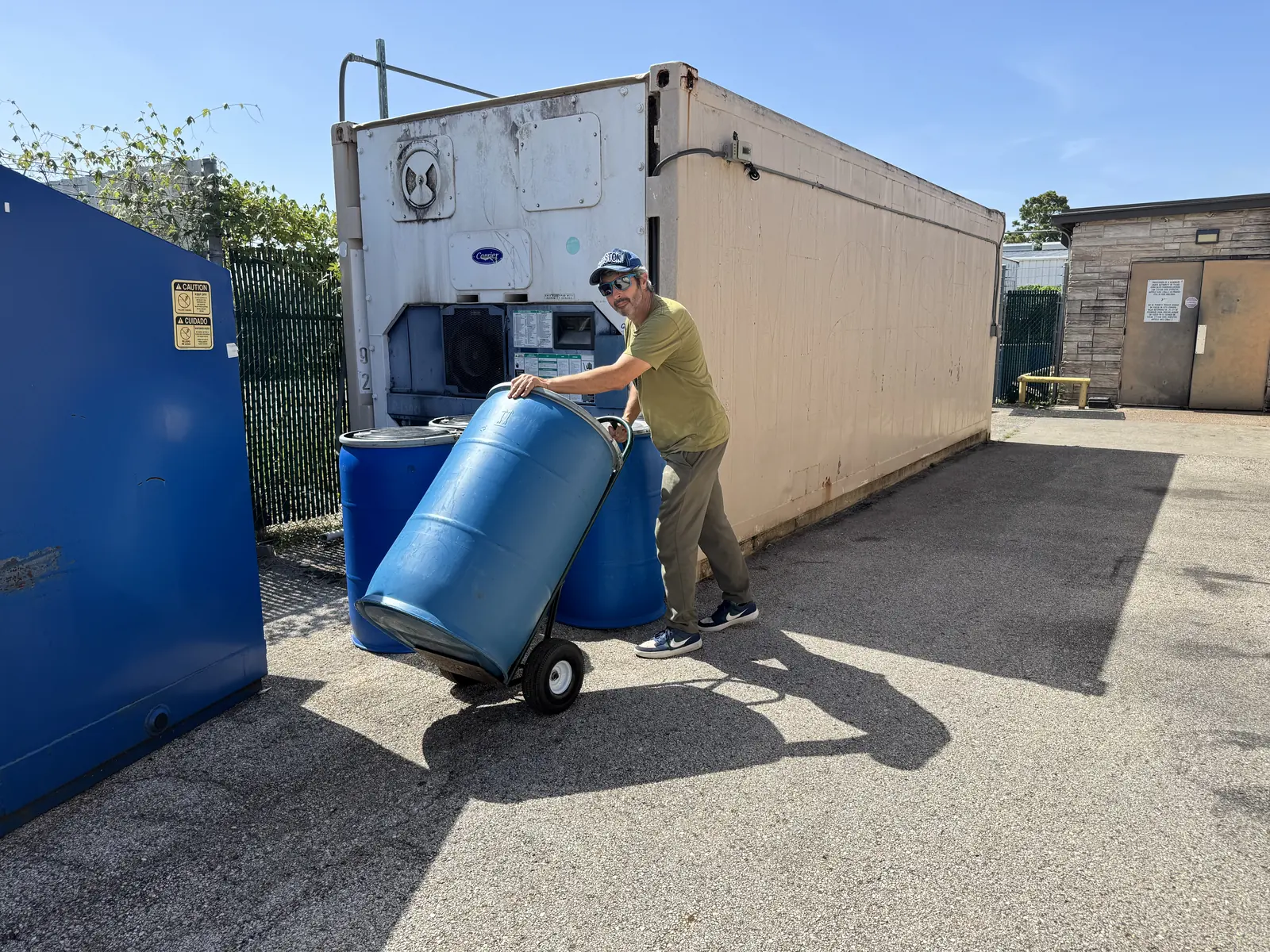
Gasket-sealed drum delivery
We place 55-gallon food-grade plastic drums with gasket-sealed lids outside your building, next to the dumpster or another outside spot that works for you. Nothing goes in your kitchen.
Inside, your crew keeps their own lined garbage can just for food waste. A normal trash can with a normal liner. We provide no indoor equipment, so there's nothing new for the health inspector to look at.
Fill & swap
Your staff tie up the food-waste liner like any other trash bag and drop it in the drum instead of the dumpster. Each week we exchange the full drums for clean ones and weigh what we hauled. A filled drum runs 100 to 200 pounds.
Weekly pickup is mandatory. Even gasket-sealed, the contents get too funky after a week. You never scrub anything; the full drums leave with us.
Composting on the farm
Your waste goes straight to a partner farm, where it's sheet composted right on the land it will feed. Layered with local carbon sources (wood chips, fallen leaves, straw) and turned through an active composting cycle. On cool mornings the rows steam.
After several months, the material darkens to a crumbly, earthy black with the clean smell of forest soil. Not rotting food.
The compost stays on the farm
The finished compost stays on the farm that made it and feeds the soil right where it was produced. Nothing is bagged, resold, or shipped back to you.
Your waste stream ends up as organic matter in Texas farmland instead of methane in a landfill.
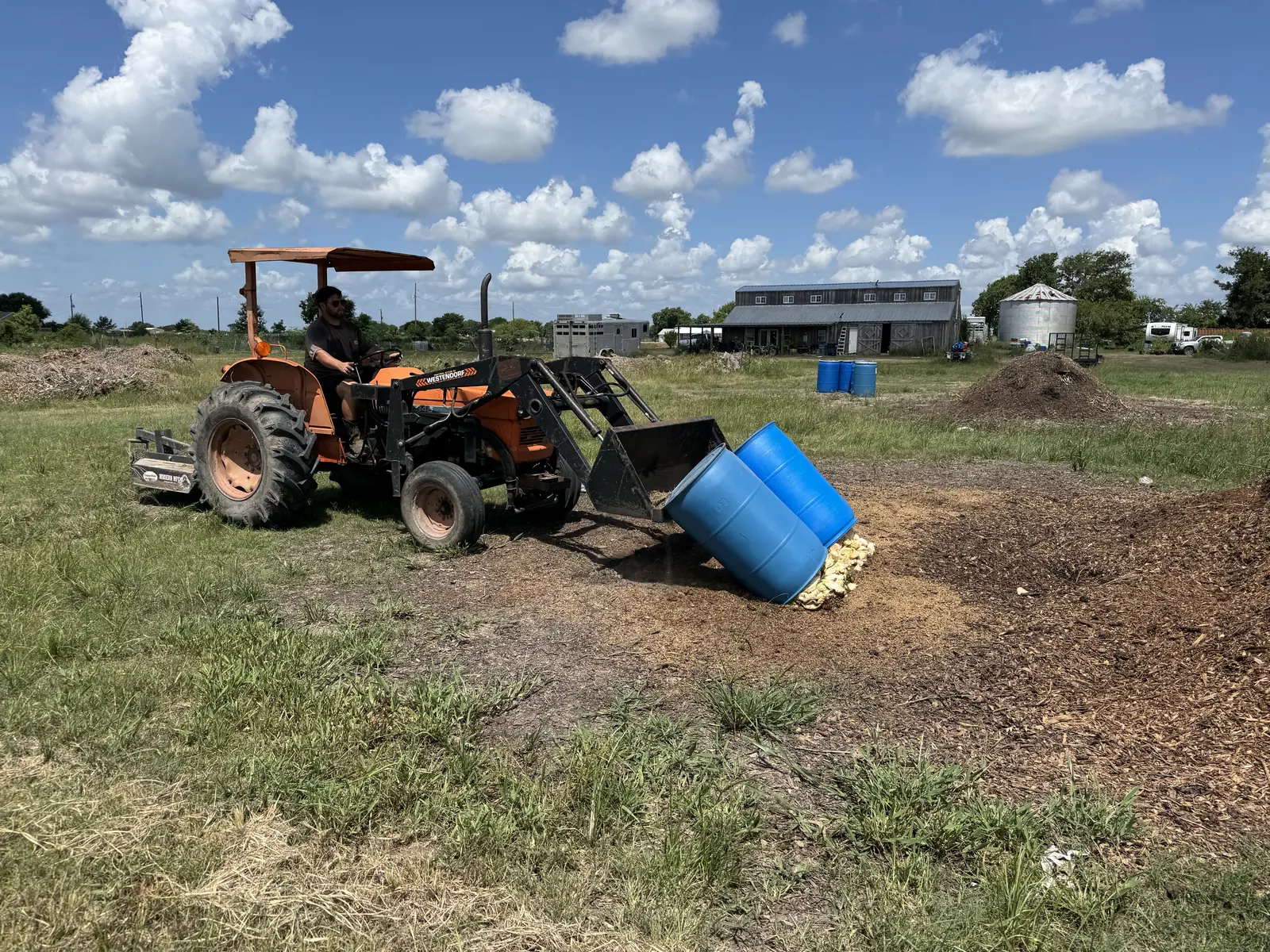
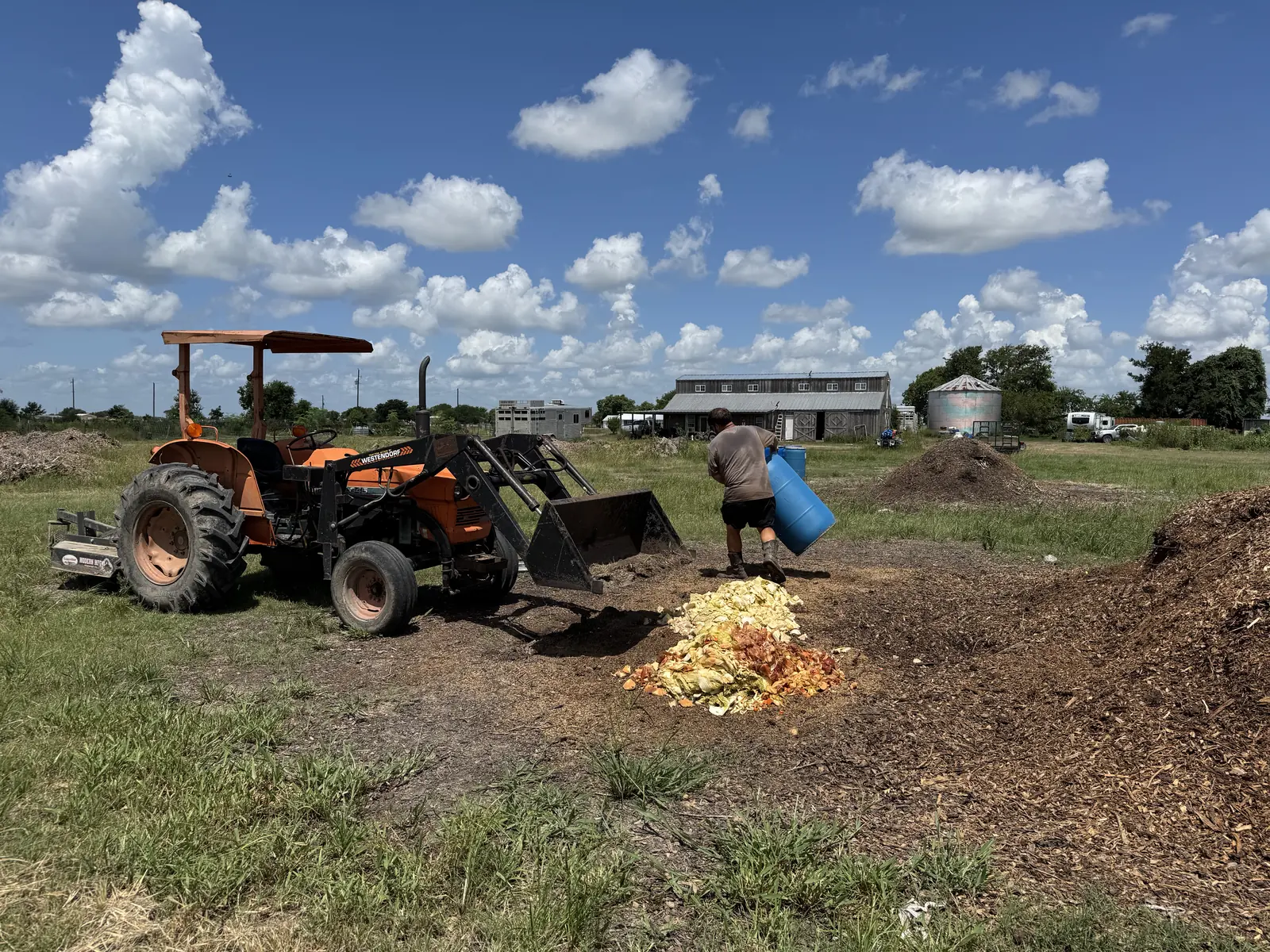
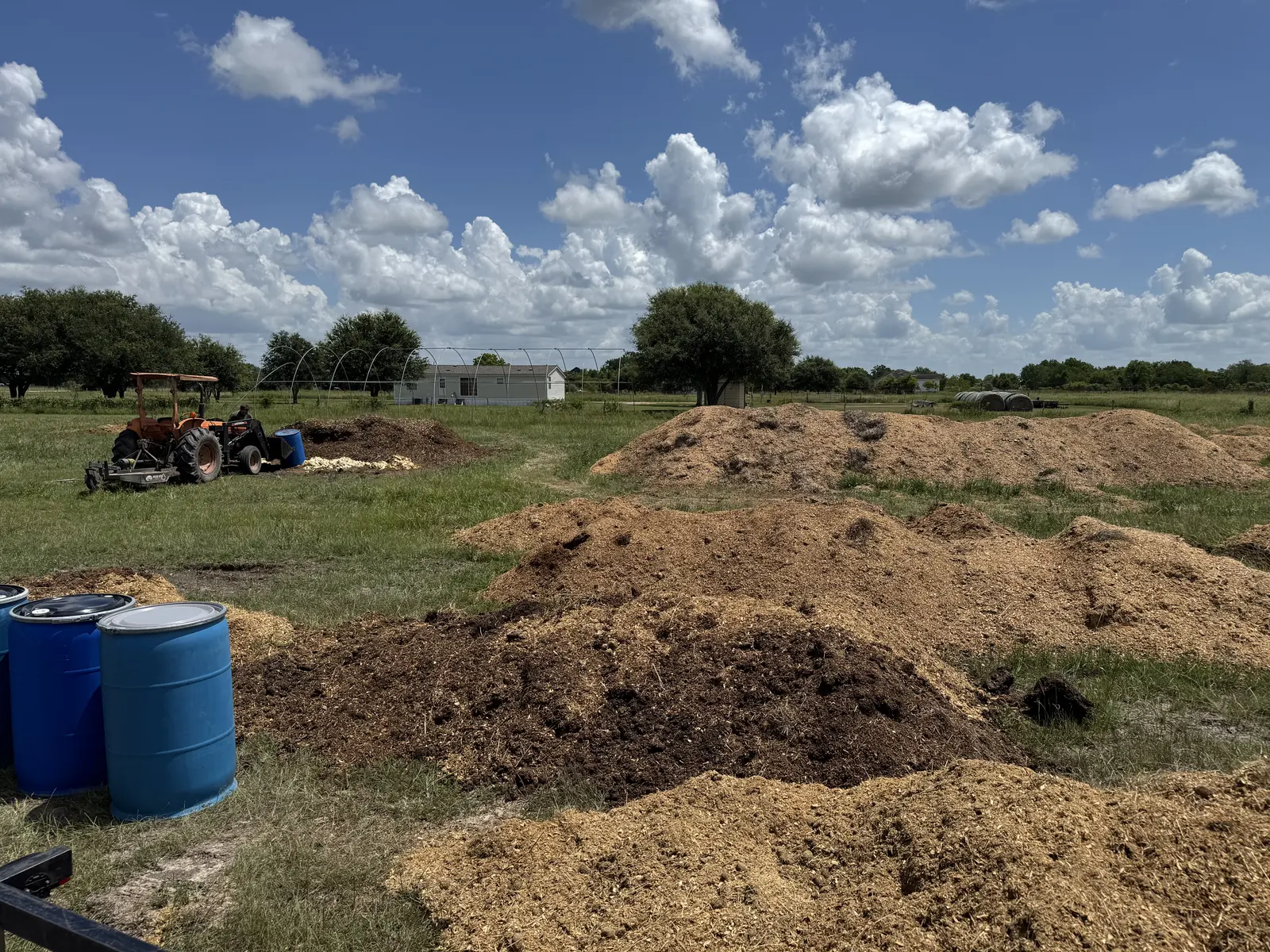
Real weekly pickups on our partner farm in Fort Bend County. Food scraps sheet-composted where the soil is built.
Why the gasket-sealed drum matters
Food waste sitting outside through a Houston summer gets ripe fast. In a regular trash tote or dumpster, that means odor, flies, and grease residue your crew ends up dealing with. In a gasket-sealed drum, it stays contained. And because we exchange full drums for clean ones instead of tipping them, nobody on your staff ever scrubs one.
FAQ
What does the container look like?
A 55-gallon food-grade plastic drum with a gasket-sealed lid. It sits outside near your dumpster or another outside spot you choose. Never in your kitchen.
What can go in the drum?
Vegetative food waste: produce culls, trim, and overripe or unsold fruit and vegetables, coffee grounds, eggshells, and depackaged bulk dry goods such as flour and grain. Composting happens on working farms rather than at a permitted facility, and a vegetative feedstock is what lets those farms take material without changing their regulatory footing. Meat, bones, dairy, plate scrapings, grease, paper, and plastic all stay out.
How often is pickup?
Weekly, for every account. Even with gasket-sealed lids, the contents get too strong after a week. On each pickup we haul the full drums, weigh them, and leave clean ones. You never wash anything.
Where exactly is the compost made?
On the partner farm itself. Full drums go straight from your site to the farm, where the contents are sheet composted on the land they'll feed. There's no central compost yard in between, and the finished compost stays on that farm to feed its soil.