Produce markets
A potential fit when the food-waste stream is kept separate at the source, volume is recurring, and an exterior drum location is available.
Commercial pickup in Harris, Fort Bend, and Montgomery County
Weekly drum swap · $10/barrel · no contract
Houston-area commercial food-waste pickup
OnFarmCompost places 55-gallon food-grade drums with gasket-sealed lids outside near your dumpster, exchanges and weighs them weekly, and takes the collected food waste to partner farms for on-farm composting. Start with a free one-week audit. Ongoing service is $10 per barrel hauled, with no contract.
Organic material must arrive source-separated or depackaged. Streams that arrive mixed with packaging or general trash are not accepted.
Single-material loads such as produce culls, source-separated kitchen scraps, or depackaged food byproducts qualify. Mixed back-of-house waste that still needs sorting on arrival, plastic, cardboard, gloves, or wrappers mixed in with food, does not, and sorting it out is not a service OnFarmCompost offers.
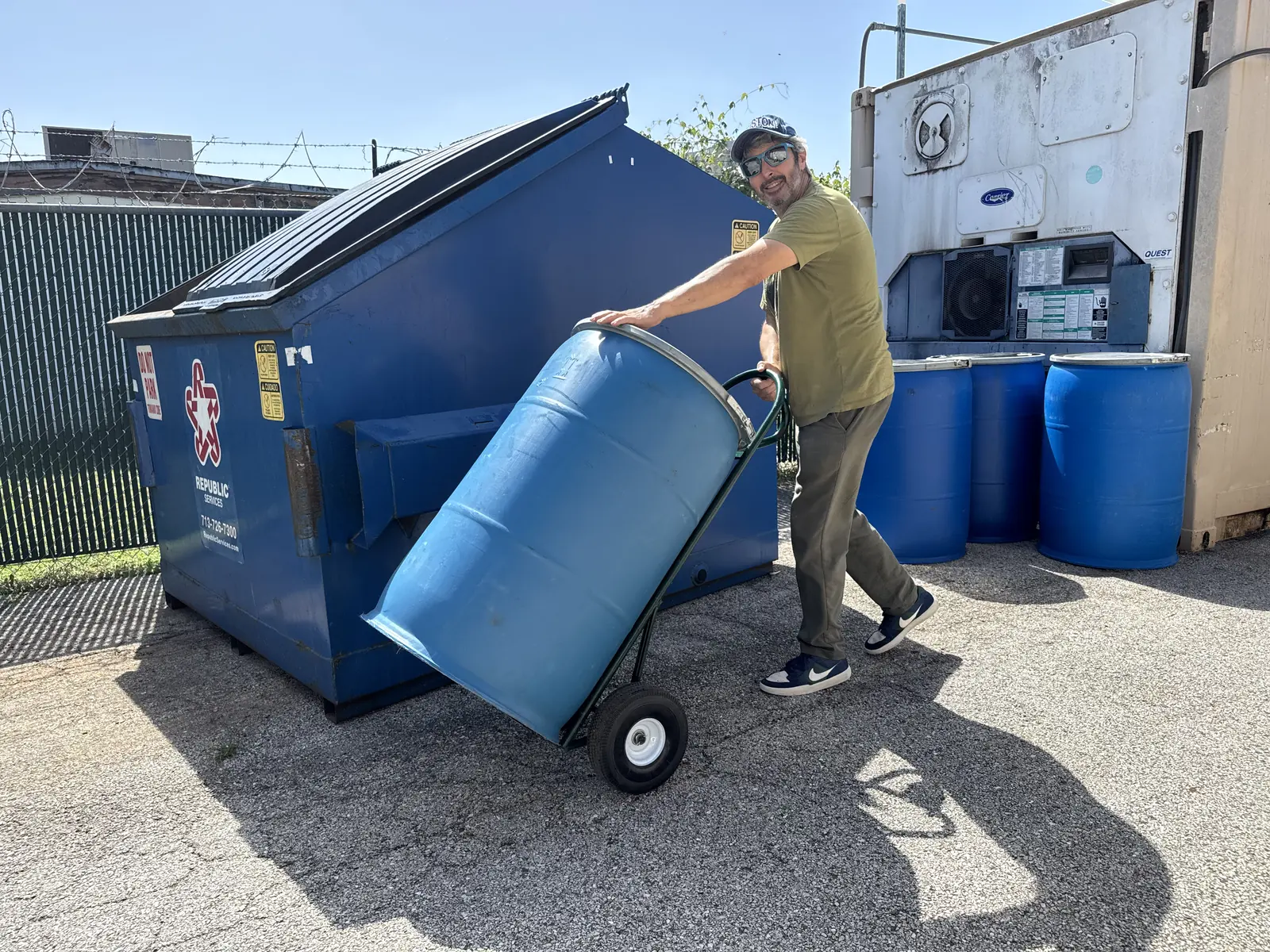
A real commercial pickup: the full drum leaves closed, its weight is recorded, and a clean replacement stays.
Route-fit customers
The audit confirms whether the address, access point, volume, material mix, and route economics fit. A county name alone does not guarantee that a stop can be added.
Running a grocery, supermarket, or produce market? The produce waste page covers what the drum takes, what stays on your existing disposal, and what makes a store a fit.
A potential fit when the food-waste stream is kept separate at the source, volume is recurring, and an exterior drum location is available.
A potential fit when the food-waste stream is kept separate at the source, volume is recurring, and an exterior drum location is available.
A potential fit when the food-waste stream is kept separate at the source, volume is recurring, and an exterior drum location is available.
A potential fit when the food-waste stream is kept separate at the source, volume is recurring, and an exterior drum location is available.
A potential fit when the food-waste stream is kept separate at the source, volume is recurring, and an exterior drum location is available.
Containment without fairy tales
An intact gasket and closed lid create a tighter barrier than exposed food scraps. That can contain the material, limit direct pest access, and make the collection point easier to manage between pickups.
It cannot guarantee zero odor, zero leakage, zero pests, or zero cleaning. Results still depend on the lid, liner, drum placement, staff behavior, spills, existing infestations, temperature, and reliable pickup. Anyone selling immunity from biology has apparently negotiated with microbes directly.
What commercial service includes
55-gallon food-grade drums with gasket-sealed lids. The kitchen keeps its existing lined collection can inside.
Full drums are removed, weighed, and replaced with clean drums on the agreed route day.
Measured collected weight and service dates. Modeled environmental estimates are identified as estimates.
Collected food waste is taken to partner farms for composting and use on the receiving land.
Provider due diligence
A useful comparison verifies the operation, not merely whose website has the most heroic leaf icon.
| Decision area | What to verify in writing |
|---|---|
| Route fit | Exact address, collection point, access window, weekly volume, and severe-weather plan |
| Container | Size, gasket condition, placement, cleaning, replacement, spill, and damaged-lid procedures |
| Accepted materials | Written list for meat, bones, dairy, oils, paper, plastic, liners, and compostable serviceware |
| Contamination | Inspection method, rejected-load policy, photos, fees, retraining, and escalation |
| Measurement | Scale method, tare handling, data retention, measured weight, and clearly labeled estimates |
| Destination | Receiving operation, handling method, rejected material, and what happens to the finished compost |
| Authorization | Which transport and receiving-site requirements apply to the actual feedstock and operation |
| Commercial terms | Price unit, setup or route fees, minimums, holidays, missed pickups, and cancellation process |
Texas composting requirements vary by material and operation. Ask which transport and receiving-site rules apply to the actual feedstock. A sustainability report is not a permit receipt.
Ongoing service is $10 per barrel hauled. Average monthly cost uses 52 weeks divided by 12 months: one weekly barrel averages $43.33, two average $86.67, and four average $173.33. The free one-week audit measures how many barrels the location actually fills.
Do not count a dumpster saving until the current waste hauler confirms a lower container size, lower frequency, or fewer extra pulls in writing. Use the food-waste cost worksheet to compare measured service cost with actual invoices.
OnFarmCompost serves commercial food-waste generators in Harris County, Fort Bend County, and Montgomery County whose organics arrive source-separated or depackaged. Coffee shops, offices, cafeterias, grocers, caterers, and food producers may fit the route. Service is confirmed by address, stream condition, and expected weekly volume rather than by business type alone.
No. An intact gasket-sealed lid contains food waste more effectively than exposed scraps and limits direct pest access while closed. It does not replace cleaning, staff compliance, spill control, building maintenance, or professional pest management, and no provider should promise zero odor or zero pests.
The current accepted-material policy is vegetative: produce culls, trim, and overripe or unsold fruit and vegetables, coffee grounds, eggshells, and depackaged bulk dry goods such as flour and grain. Composting happens on working farms rather than at a permitted facility, and a vegetative feedstock is what lets those farms take material without changing their regulatory footing. Keep meat, bones, dairy, post-service plate scrapings, paper, plastics, compostable bioplastics, and grease of every kind out. Material has to arrive already separated from packaging and trash; loads that need sorting on arrival are not accepted. Confirm unusual materials before changing staff procedure.
The standard summary reports measured collected weight for the period and the service dates behind it. Contamination observations may be included when recorded. Any emissions or environmental equivalency is a model-based estimate and must be labeled separately from measured weight.
Weekly. OnFarmCompost removes the full drums, records their weight, and leaves clean replacements on the agreed route day. The service plan should also document holiday, severe-weather, missed-pickup, access, damaged-lid, and overflow procedures.
Ongoing service is $10 per barrel hauled, with no contract. One barrel every week averages $43.33 per month; two average $86.67; four average $173.33. A free one-week audit measures the actual barrel count before ongoing service.
The audit records the actual weight, barrel count, contamination observations, collection point, and route fit. The report is yours even when ongoing service is not the right answer.
Sources and verification anchors: City of Houston composting-company page; TCEQ composting and mulching guidance; Texas DSHS retail-food resources; OnFarmCompost operating policy and measured service records. Rules, routes, materials, and provider terms must be reverified for the specific account.